Co-op Guide
Permafrost Co-op Guide (2026) – 4-Player Multiplayer Tips & Strategy
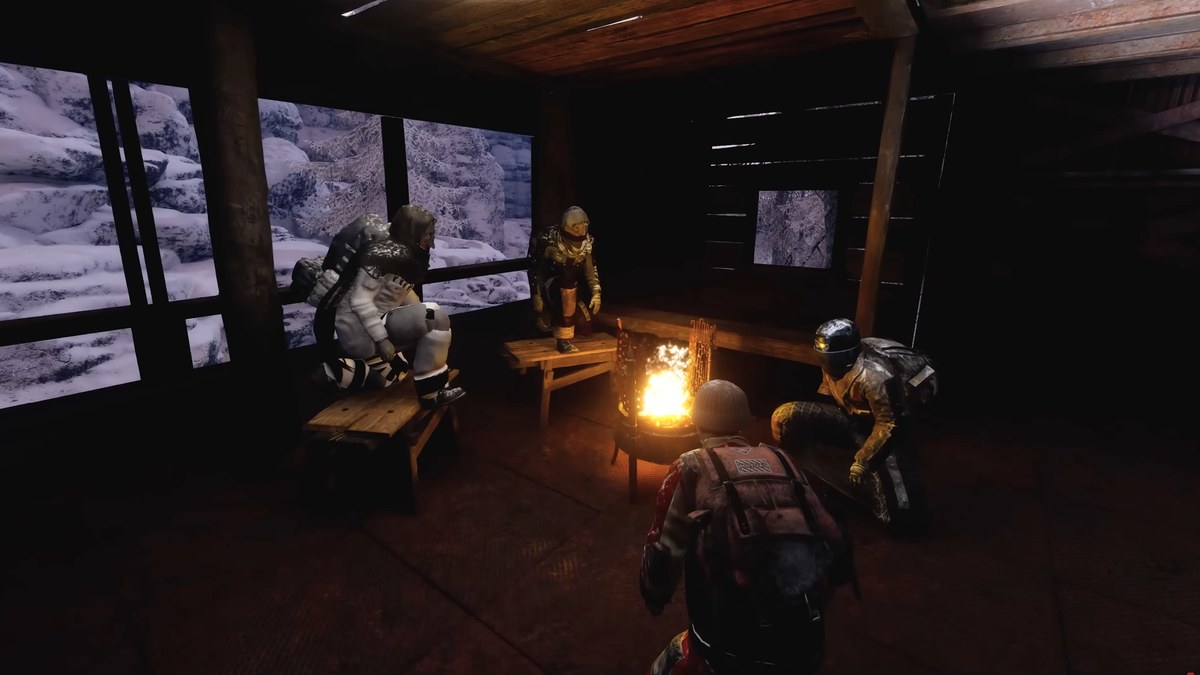
Permafrost is punishing alone and a completely different experience with a coordinated team. The game's online co-op supports up to four players sharing a single frozen world — and when that team divides its labour intelligently, it becomes exponentially more effective than any solo survivor. This Permafrost co-op guide covers everything your group needs to survive together: how Permafrost multiplayer works from setup to session management, the four-role division system that keeps your team efficient, how to manage shared resources without friction, co-op-specific base building strategy, how to handle blizzards as a unit, and the coordination habits that separate a team that thrives from one that collapses under pressure. Whether you're playing Permafrost 4-player with friends or joining an unfamiliar group, this guide gives you the framework to make it work. New players should read our Permafrost beginner's guide first to get the solo survival fundamentals in place.
How Co-op Works in Permafrost
Permafrost supports online co-op for up to four players in a single shared world. One player hosts the session — creating the world and managing the save — while up to three others join via invite or a session code. The host's world persists between sessions; other players can leave and rejoin without losing progress. As the host, choose whoever has the most stable internet connection for the smoothest experience, especially during resource-intensive moments like blizzards and large-scale building.
Each player manages their own survival meters — warmth, hunger, thirst and stamina — independently. There is no shared health pool; every team member must keep themselves alive. What you share is the world itself: the base, the stockpile, the crafting stations and the progression. Difficulty scales with the number of active players — more survivors means more demand on food, fuel and space — so a team that doesn't coordinate is actually harder to run than solo play. A team that does coordinate is dramatically easier. The difference is entirely in how well your group divides and owns its responsibilities.
Role Division – The 4-Player Setup
The single most effective thing a Permafrost co-op group can do is assign clear roles before the first session begins. When everyone does a little of everything, nobody does anything well and critical tasks get forgotten. When each player owns a specific responsibility, the group covers all survival needs simultaneously and advances at a pace no solo player can match.
The four-role setup below is the recommended starting framework for a full team. Roles should flex during crises — if the base is under threat, everyone defends — but having a clear default owner for each job is what makes daily operations run without confusion. Rotate roles between sessions if players want variety; the important thing is that during any given session, each player knows their primary job.
| Role | Responsibility | Recommended Gear |
|---|---|---|
| ScoutScout | Explores the map ahead of the group; identifies new resource deposits, safe routes and incoming threats; marks locations for teammates; provides advance warning of blizzards and wildlife | Bark Canteen, Iron Blade, full Fur Hood + Coat, fire kit, dog companion |
| GathererGatherer | Runs dedicated resource loops for Frost Timber, Flint Stone, Plant Fiber and Bark; keeps the communal stockpile supplied for building, crafting and fuel needs; maximises carry efficiency per trip | Iron Axe, Stone Pickaxe, maximum-capacity pack, Snow Boots, fire kit |
| HunterHunter | Works with the dog companion to secure Raw Meat and Frozen Hide through systematic hunting; manages the team's food supply and clothing material pipeline; handles wildlife threats near camp | Hunting Bow, Iron-Tipped Spear, dog companion, Fur Coat, Hide Gloves |
| BuilderBuilder | Constructs and expands the base; maintains all indoor heat sources and fuel reserves; upgrades walls and workstations; monitors base integrity before and during blizzards; manages crafting station layout | Crafting Bench access, Stone Firepit fuel priority, Reinforced Wall materials |
Shared Resources & Inventory Management
Shared storage is one of co-op's greatest advantages and one of its most common sources of friction. The fix is simple: establish clear rules before anyone starts depositing materials, and enforce them consistently.
The most effective system is communal storage organised by category: one chest for fuel and building materials, one for food and water supplies, one for crafting components and one for clothing materials. Every player deposits into the correct chest on return from an expedition. When you can see at a glance what the group has, planning gathering runs and crafting sessions is fast and accurate — and nobody duplicates effort by gathering materials the base already has in surplus.
To prevent overlapping gathering routes, assign each role a dedicated resource zone before sessions start. The Gatherer owns the forest and rock outcrops. The Hunter owns the wildlife areas. The Scout reports on new zones before anyone else enters them. The Builder draws from the communal stockpile and requests specific materials when they need a top-up. This division keeps four players from running the same loop simultaneously and wasting collective cold-exposure time on redundant trips.
Communicate before drawing large quantities of any shared resource — particularly fuel during a storm or food during a period of bad hunting. A brief "taking 10 Frost Timber for the east wall" in team chat prevents the kind of silent depletion that leaves the Builder with nothing and the fire going cold at midnight.
Co-op Base Building Strategy
A co-op base has to work for four different people doing four different jobs simultaneously. The same principles from our Permafrost base building guide apply, but at group scale, a few co-op-specific decisions make a significant difference.
Build one strong base, not four private ones. The temptation when playing with friends is for each player to build their own shelter — it feels autonomous and personal. It's also a disaster for warmth, resources and defense. Four separate fires burn four times the fuel. Four separate structures cost four times the materials. One large, well-sealed, well-heated shared base concentrates your warmth, your stockpile and your defensive perimeter in one place the whole team can anchor to.
For a full team, follow the four-player layout from our base building guide: a 5×5 compound with two Stone Firepits for even heat distribution, a dedicated crafting wing (Crafting Bench + Forge), a cooking and food-processing area, four beds in a shared rest room, and a storage block positioned immediately inside the main door so returning gatherers can deposit without crossing the whole base. Two doors — one primary entrance, one secondary for the Builder's material runs — reduce congestion during busy sessions.
Assign the Builder role as the sole authority over base expansion and structure upgrades. Base-by-committee — four players all adding walls wherever they feel like it — creates disorganised layouts that are hard to heat and impossible to defend. One person owns the base plan and executes it; everyone else contributes materials and respects the design.
Surviving Blizzards as a Team
A blizzard that threatens one player threatens all of them simultaneously. The team that handles storms better than solo survivors is the one that establishes a blizzard protocol before the first storm hits — not in the middle of one.
Pre-storm protocol: The Scout's job includes blizzard detection. When they spot warning signs — darkening sky, rising wind, the dog companion refusing to move — they broadcast immediately. All players stop non-essential outdoor tasks and return to base. The Builder confirms the base is sealed and the fires are stocked. No one stays outside once the protocol is called, regardless of what they were doing.
Fuel responsibility: Designate the Builder as the official fuel keeper during storms. No other player touches the fire fuel reserve without asking first. This eliminates the most common blizzard death scenario: everyone assumes someone else topped up the fire, and it goes out at 3am while the team sleeps. One accountable fuel keeper prevents this entirely.
Watch rotation: During long blizzards that extend into multiple in-game nights, consider a loose watch rotation where one player stays logged in and active while others rest between sessions. The watcher monitors fuel levels, handles any wildlife that approach the base, and processes any indoor tasks — crafting repairs, food smoking, stockpile organisation. Coming out of a blizzard with a fully stocked base and repaired gear is one of the clearest advantages a coordinated co-op team has over a solo player.
Communication & Coordination Tips
Voice chat is the gold standard for Permafrost co-op — it allows real-time threat warnings, resource requests and blizzard calls that can't wait for typed messages. If your group uses it, establish a few simple conventions: a short callout when heading out, a check-in when returning, and an urgent signal (a specific phrase or sound) for genuine emergencies that require an immediate all-hands response.
For groups playing without voice, the in-game marker or ping system carries much of the same information. Before each session, agree on a brief text-based check-in rhythm: status update when leaving base, status update when returning, and a drop-everything signal for emergencies. The critical habit is that no player goes dark. A teammate who stops responding while outdoors is, in Permafrost's terms, a potential rescue scenario in progress. Always broadcast your plans and location before heading into unknown territory, regardless of the communication method.
At the start of each session, spend two minutes aligning on the day's goals: what the Gatherer is targeting, where the Hunter is going, what the Builder needs, and what the Scout is scouting. This session-opening briefing prevents duplication, fills in any gap in the coverage and ensures the whole team is moving in coordinated directions rather than independently reacting to whatever happens to them first.
Common Co-op Mistakes to Avoid
⚠ 3 Mistakes That Kill Co-op Teams
- Everyone building their own private shelter. Four separate bases fragment your warmth, your materials and your defensive perimeter across four half-finished structures. The fuel cost alone — four fires instead of one — drains your collective stockpile at a rate that becomes unsustainable within a few in-game days. Commit to one shared base from the first session and never deviate.
- No designated fuel keeper for the communal fire. In a group, everyone assumes someone else topped up the fire before bed. Nobody did. The fire goes cold at 2am during a blizzard. The whole base freezes. Assign one player — always the Builder — as the sole person responsible for fire fuel levels. This single rule prevents the most common co-op death scenario in every survival game.
- Players advancing at wildly different speeds. One player who rushes into advanced gear while teammates are still in fiber wraps creates permanent equipment inequality that makes hard events brutal for the underprepared players. Progress together: the Crafter prioritises gear upgrades for the team in rough order of need, not personal preference, and players share materials rather than hoarding for solo upgrades.
⚡ 5 Key Co-op Tips
- Agree on roles before session one begins. Five minutes of pre-game planning eliminates hours of mid-session confusion. Assign Scout, Gatherer, Hunter and Builder at the start, and stick to them by default.
- Organise communal storage by category from day one. Labelling or positioning chests by material type — fuel here, food here, components here — saves time on every single session and prevents silent stockpile depletion.
- The Scout calls blizzards, everyone responds immediately. When the Scout triggers the blizzard protocol, outdoor tasks stop. No exceptions. A missed blizzard call that catches two players in the open is a team wipe in progress.
- Never let a teammate go dark outdoors. A player who stops communicating while outside is a problem. Check in before assuming they're fine. The cost of a false alarm is nothing; the cost of assuming fine when they're not is potentially a lost run.
- Run one strong base, not four comfortable ones. Every material and fuel unit spent on private shelters is stolen from the shared base that keeps everyone alive during the next three-day blizzard.
Co-op FAQs
How many players can play Permafrost co-op?
Permafrost supports online co-op for up to four players. All four survivors share a single world instance, each managing their own survival meters but sharing a base, shared storage and shared progression. The game is fully playable in any group size from two to four, and the host can always play the world solo when other players are offline.
Is Permafrost cross-platform multiplayer?
Permafrost launches on PC via Steam for Early Access on October 9, 2026. Cross-platform details for any future console versions have not been confirmed for the initial Early Access window. Check the official SpaceRocket Games and Toplitz Productions channels for updated platform and crossplay announcements as development continues through Early Access.
Can I play Permafrost solo after starting a co-op game?
Yes. The host can play the shared world solo at any time when other players are offline. World state, base progress, resources and story progression all carry over between solo and co-op sessions. Other players can rejoin later and pick up where the world currently is. This makes Permafrost co-op flexible for groups that can't always synchronise playtime — you're not locked out of the world just because your team isn't available.